
AI-Generated Content: Can Machines Truly Replace Human Writers?
Introduction
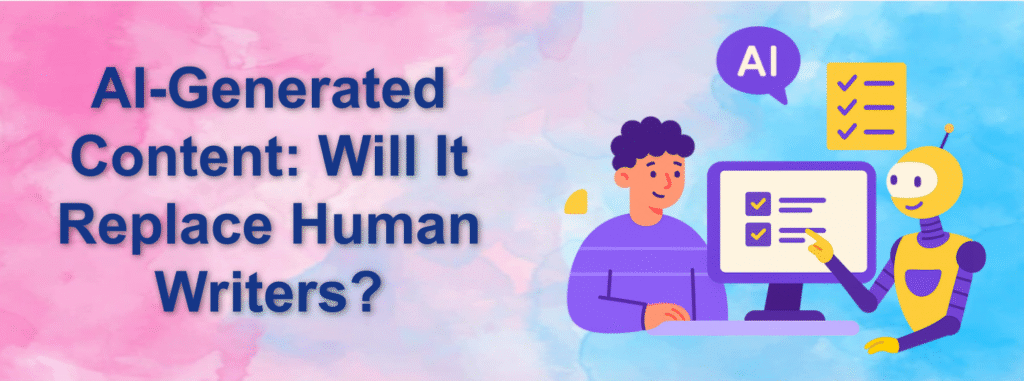
Artificial Intelligence has rapidly transformed the content creation landscape. Today, businesses can produce blogs, articles, and marketing materials in a matter of seconds using AI-powered tools. This advancement has sparked an ongoing discussion about whether AI-generated content can replace human writers or simply support them. While AI excels in speed and automation, human writers remain essential for creativity, emotional connection, and originality. The real question is not replacement, but coexistence.
This article examines how AI is reshaping content writing, its limitations, and what the future holds for writers in an AI-driven world.
The Role of AI in Modern Content Creation
AI-powered writing tools have become valuable assets for businesses and marketers. Their ability to process data and generate text efficiently has changed how content is produced.
1. Rapid Content Generation
AI can create drafts, outlines, and complete articles almost instantly. This allows organizations to meet tight deadlines and maintain consistent publishing schedules without overburdening writing teams.
2. Affordable Scaling
Producing large volumes of content through human writers alone can be costly. AI provides a budget-friendly solution for businesses that require frequent updates, product descriptions, or marketing copy.
3. Search Engine Optimization Support
AI tools can analyze search trends, keywords, and user intent to create content optimized for search engines, helping businesses improve visibility and reach.
4. Content Personalization
By analyzing audience data, AI can tailor messages for specific users, making email campaigns, advertisements, and social media posts more relevant and engaging.
Where AI Falls Short
Despite its strengths, AI-generated content has clear limitations that prevent it from fully replacing human writers.
1. Limited Creativity and Emotion
AI lacks genuine imagination and emotional awareness. While it can mimic writing styles, it cannot create original stories or deeply connect with readers on a human level.
2. Accuracy and Reliability Issues
AI systems rely on existing data, which may be outdated or inaccurate. Without human oversight, content may include factual errors or misleading information.
3. Weak Understanding of Context
Nuances such as humor, sarcasm, cultural references, and tone are difficult for AI to interpret correctly. Human writers naturally adapt to these subtleties.
4. Risk of Repetitive Content
Because AI learns from existing material, its output can sometimes sound generic or predictable, making it harder for brands to stand out.
The Future of Writing: Collaboration, Not Competition
Rather than replacing writers, AI is best viewed as a supportive tool. Human writers bring qualities that AI cannot replicate, including:
Creative thinking and storytelling
Emotional intelligence and authenticity
Ethical judgment and fact verification
Development of a unique brand voice
A hybrid approach—where AI assists with research, idea generation, and repetitive tasks while humans refine and personalize the content—offers the most effective solution.
Conclusion
AI-generated content has become an influential force in modern writing, offering speed, efficiency, and scalability. However, it lacks the creativity, emotional depth, and originality that define human expression. Instead of replacing human writers, AI is set to become a powerful assistant that enhances productivity and streamlines workflows.
The future of content creation lies in collaboration, where AI handles efficiency and humans provide creativity, insight, and meaning. When used together, AI and human writers can produce content that is both impactful and authentic.
✨ The strongest content will come from the partnership between artificial intelligence and human imagination.